


FOB vs CIF: Which Terms Protect Your Margin?
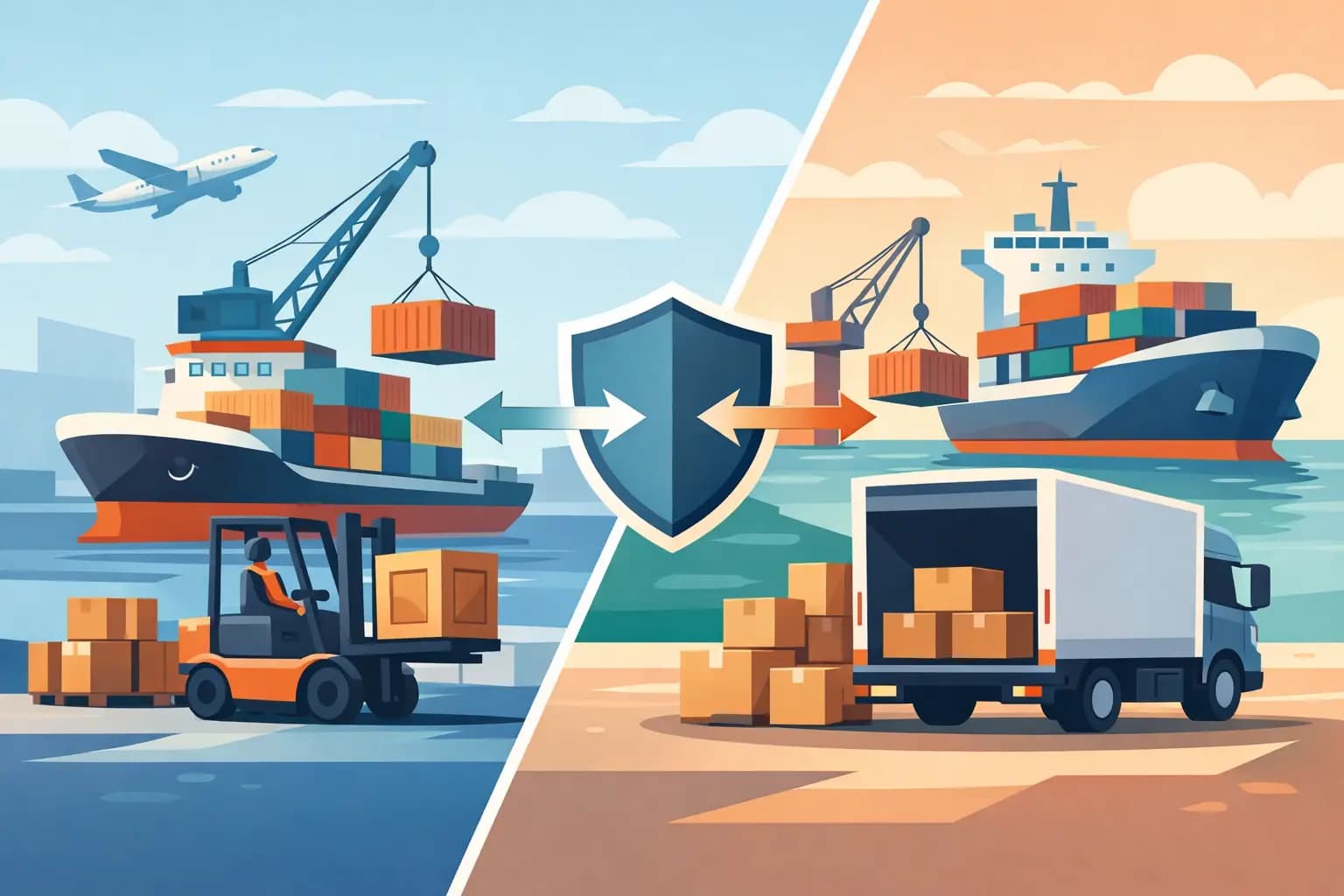
A container priced $8,000 below market is not automatically a better deal. If the freight quote, port charges, insurance limits, and risk transfer are unclear, that discount can disappear before the goods reach your warehouse. For importers buying liquidation lots, branded overstock, tools, electronics, or mixed pallets, the FOB vs CIF decision directly affects landed cost, cash flow, and who has to solve the problem when cargo is delayed or damaged.
The right term depends on more than the unit price. It depends on your freight buying power, the shipping lane, the supplier's reliability, the value and fragility of the goods, and how much control you need over the move.
FOB vs CIF: The Commercial Difference
FOB means Free On Board. Under FOB, the seller clears the goods for export and delivers them on board the vessel at the named port of shipment. Once the goods are loaded on the ship, risk transfers to the buyer. The buyer normally arranges and pays for ocean freight, cargo insurance, and the shipment from the destination port onward.
CIF means Cost, Insurance and Freight. The seller clears the goods for export, loads them on board, arranges ocean freight to the named destination port, and provides marine insurance. However, this is the point buyers often miss: risk still transfers when the goods are loaded on the vessel at origin, not when they arrive at the destination port.
In practical terms, CIF gives the buyer a delivered-to-port freight arrangement, while FOB gives the buyer more control over the transport. Neither term means the shipment is delivered to your warehouse, cleared through U.S. Customs, or free of destination charges.
FOB Gives Volume Buyers More Control
FOB is often the stronger choice for established importers, distributors, and buyers moving repeat container loads. You select the freight forwarder, negotiate the ocean rate, choose the sailing, and receive the shipping documents through your own logistics process.
That control can matter when you buy across several countries or consolidate goods from multiple suppliers. A buyer sourcing apparel from Turkey, cookware from Europe, and consumer goods from Asia may be able to combine freight planning, use contracted rates, and keep visibility in one system. On regular lanes, those savings can be meaningful across a year of purchases.
FOB also makes the cost structure easier to audit. You can separate the supplier's product price from freight, insurance, handling, destination terminal charges, customs brokerage, duties, drayage, and final delivery. This helps purchasing teams compare offers on a true landed-cost basis rather than choosing the lowest headline price.
The trade-off is responsibility. Once the cargo is on board, the risk is yours. If the vessel rolls the booking, a port strike creates delays, or the cargo is damaged in transit, your forwarder and insurance policy become central to the recovery process. FOB buyers need a reliable logistics partner, cargo coverage that matches the load, and enough operational capacity to manage documents and deadlines.
For high-volume buyers, that is usually manageable. For a first-time importer buying one mixed liquidation container, it may be more exposure than the apparent freight savings justify.
CIF Can Simplify the First Leg of the Move
CIF is attractive when the buyer wants the seller to arrange freight to a named destination port. It can reduce the number of parties involved at the start of a transaction and give the buyer a more complete quote for goods plus ocean transport.
This can be useful for occasional importers, buyers testing a new origin market, or procurement teams buying a time-sensitive stock opportunity without an established freight setup in that country. A CIF offer may allow you to approve a deal quickly, provided the destination details are fully stated and independently checked.
But CIF does not eliminate buyer responsibility. You still need to handle import clearance, duties and taxes, destination terminal charges, delivery appointments, trucking, unloading, and any storage fees after arrival. A low CIF price can look attractive until local charges appear on the arrival notice.
CIF insurance also deserves close attention. The seller must provide marine insurance, but the required cover is commonly basic protection rather than broad all-risk coverage. For a container of high-value branded footwear, electronics, or damage-sensitive household goods, basic insurance may not provide the protection your business expects. Ask for the insurance certificate, the insured value, the policy terms, exclusions, claim procedure, and the party entitled to claim.
Do not assume that a seller-paid policy will solve every loss. Confirm it before the container leaves port.
Risk Transfers Earlier Than Many Buyers Expect
The biggest operational mistake in CIF transactions is believing that the seller owns the transit risk until the shipment reaches the destination port. Under CIF, that is not how the term works. The seller pays for freight and insurance, but the buyer carries the risk from the point the goods are loaded on the vessel.
This difference between cost and risk is why the purchase order must be precise. State the exact named port, the applicable Incoterms version, the required shipment date, the document package, and the loading standard. For liquidation and surplus inventory, add practical conditions: pallet count, carton count, visible condition, lot photos, manifests where available, loading photos, container seal details, and whether substitutions are permitted.
If an offer simply says “CIF USA” or “FOB Europe,” it is not complete enough to price the deal. CIF Los Angeles is different from CIF Savannah. FOB Rotterdam is different from FOB Istanbul. The named port determines the handoff point, freight route, and local charges that shape your real margin.
Containerized Cargo Needs an Extra Check
FOB and CIF are Incoterms designed for sea or inland waterway transport. In container shipping, the seller often hands the sealed container to the carrier at a terminal before it is physically loaded onto the vessel. For that reason, FCA, or Free Carrier, is often a cleaner rule for containerized shipments because risk transfers when the carrier receives the goods at the agreed place.
That does not mean FOB or CIF cannot appear in commercial discussions. They are widely used, and buyers understand them. It does mean you should not rely on a three-letter term alone. Clarify the real handoff: Is the supplier responsible until the container enters the terminal? Until export customs clearance? Until it is loaded on the vessel? Who pays if the container misses the planned sailing?
Clear written answers prevent expensive arguments after a delay.
How to Compare FOB and CIF Offers Correctly
A serious buyer should convert every offer into the same landed-cost model. Start with the goods value and add every cost required to place saleable inventory in your facility. That includes ocean freight, cargo insurance, export charges, destination fees, customs brokerage, duties, bond costs where applicable, inland transport, unloading, and expected inspection or rework costs.
Then compare timing. A CIF offer with an immediate sailing may produce a faster replenishment cycle than an FOB offer that requires you to arrange freight from scratch. On fast-moving seasonal goods, weeks matter. On slower-moving industrial equipment or durable household goods, freight control may be worth more than a small speed advantage.
Also compare the operational quality of the supplier and freight arrangement. Request the carrier name, estimated sailing and arrival dates, free-time terms, container type, loading plan, and a written list of charges excluded from the quote. If the cargo is a mixed lot, ensure the commercial invoice and packing list match the agreed quantities and descriptions. Accurate paperwork is not administration for its own sake. It protects customs clearance, inventory receiving, and your ability to sell the stock without surprises.
Which Term Fits Your Purchase?
Choose FOB when you have a trusted forwarder, purchase regularly, want to negotiate freight directly, or need to coordinate multiple shipments. It is usually the better structure for buyers who treat logistics as part of their margin strategy.
Choose CIF when you need the supplier to arrange ocean freight, are entering a new origin market, or value a faster all-in-to-port offer. Use it only after confirming the destination charges, insurance scope, documents, and exact risk-transfer point.
For either term, the product inspection and commercial agreement remain just as important as the shipping rule. Incoterms allocate tasks, costs, and risk. They do not guarantee product quality, payment security, title transfer, or a supplier's performance. Those protections belong in your purchase contract and transaction process.
At GLOBAL STOCKS, bulk buyers should treat freight terms as part of the deal evaluation from the first quote, not as an afterthought after the stock is reserved. A profitable load is one you can price, receive, clear, and turn quickly. Before committing, put every port, charge, document, and responsibility in writing - then buy the inventory with a margin you can defend.