


What Is Wholesale Liquidation Inventory for Buyers?
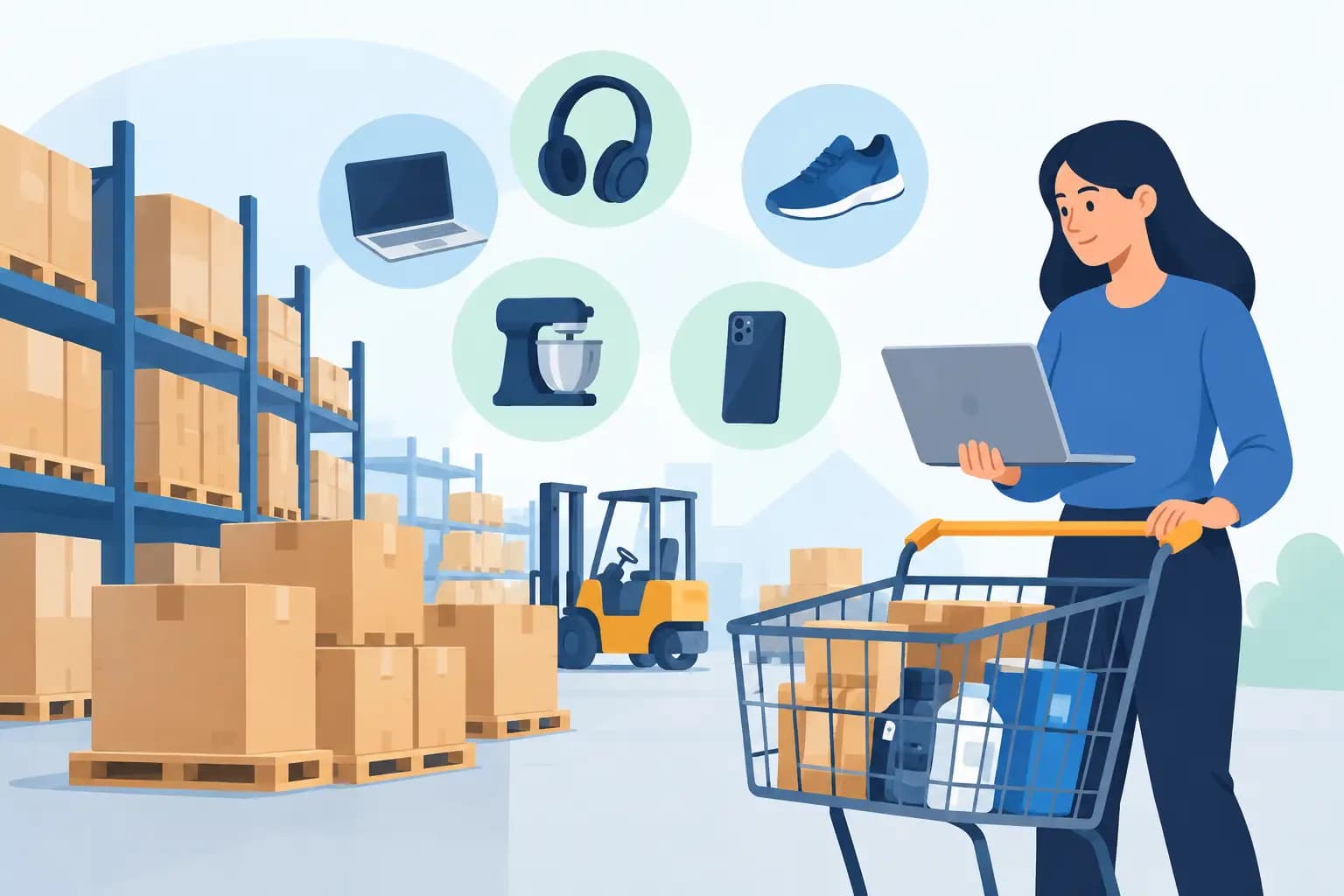
A retailer can have perfectly sellable goods sitting in a warehouse and still need them gone this week. A seasonal line has changed, shelf space is limited, a customer return program has grown too large, or a supplier has shipped more than demand requires. That is where liquidation enters the market. When buyers ask, “what is wholesale liquidation inventory,” they are asking how those goods move from one business’s excess stock problem into another business’s margin opportunity.
Wholesale liquidation inventory is bulk merchandise sold below its original wholesale or retail value because the original owner needs to clear it quickly. It is typically offered by the pallet, truckload, container, or complete lot rather than as individually selected units. The goal for the seller is speed and warehouse recovery. The goal for the buyer is to acquire resellable inventory at a price that leaves room for freight, handling, selling costs, and profit.
The opportunity is real, but liquidation is not a uniform product category. One lot may be new, branded, shelf-ready inventory. Another may include customer returns, mixed condition goods, or items with incomplete packaging. Serious buyers look past the headline discount and evaluate the actual lot, its condition, its paperwork, and the market where it will be resold.
What Is Wholesale Liquidation Inventory?
Wholesale liquidation inventory is excess, discontinued, returned, closeout, or distressed merchandise sold in volume to business buyers. It can include apparel, footwear, cookware, toys, electronics, tools, household goods, sportswear, industrial supplies, and equipment. Inventory may originate from retailers, manufacturers, distributors, insurance claims, bankruptcies, canceled orders, or warehouse consolidations.
The term “liquidation” describes the seller’s need to convert stock into cash, not automatically the quality of the merchandise. A retailer may liquidate new items simply because a season has ended or a product range is being replaced. A manufacturer may sell overproduction after a forecast misses the mark. A distributor may clear stock after a packaging update or a change in regional demand.
This distinction matters because a liquidation buyer is not only purchasing products. The buyer is purchasing a specific commercial situation. Why is the stock being sold? How fast must it move? Is it factory-new, shelf pull, returned, untested, or salvage? The answer affects both the price and the resale strategy.
Where Liquidation Stock Comes From
Most wholesale liquidation inventory falls into a few practical sourcing categories. New overstock is often the cleanest format for resellers: the goods are unused, frequently in original packaging, and may come from canceled orders, excess production, or leftover seasonal inventory. Closeouts are similar but are usually tied to discontinued product lines, retailer resets, or end-of-season clearance.
Customer returns are different. Some units may be unopened and ready for resale; others may have damaged boxes, missing accessories, cosmetic wear, or functional defects. These lots can offer deeper discounts, especially in consumer electronics, home goods, and tools, but they require a stronger inspection, testing, and sorting process.
Shelf pulls are products removed from retail shelves. They are often usable and may be new, but outer packaging can show labels, price stickers, handling marks, or security tag residue. Salvage inventory has the highest risk and is generally intended for buyers with repair capacity, parts channels, recycling programs, or highly controlled secondary markets.
A good offer should identify the source condition clearly. Broad phrases such as “mixed goods” or “assorted stock” are not enough for a buyer planning a serious purchase. Ask whether the inventory is new, returns, tested returns, untested returns, shelf pulls, or salvage. If the seller cannot explain the condition category, price the lot as higher risk.
How Wholesale Lots Are Sold and Priced
Liquidation inventory is normally sold as a defined quantity: a pallet with a stated unit count, a lot with a packing list, a truckload with estimated pallet volume, or a container for export. Some offers include detailed SKU manifests with product names, quantities, suggested retail prices, and model numbers. Other offers are unmanifested mixed lots sold at a lower cost because the buyer accepts less visibility.
Pricing may be based on a percentage of retail value, a percentage of the original wholesale price, a per-unit rate, or one fixed price for the full lot. None of these figures should be viewed in isolation. A lot advertised at 15% of retail can still be expensive if the suggested retail value is unrealistic, the brand has weak demand, or a large share of units cannot be sold as new.
The number that matters is your landed cost per saleable unit. That includes the purchase price, domestic transport or ocean freight, insurance, duties where applicable, customs handling, unloading, warehousing, labor, inspection, repackaging, marketplace fees, and expected loss. Buyers who skip this calculation can mistake a low purchase price for a profitable deal.
For example, a pallet of 500 small appliances may look attractive at $4,000. But if 10% are unsellable, freight adds $900, testing and repacking cost $600, and sales fees take a meaningful share of revenue, the usable inventory cost changes quickly. The right purchase price depends on condition, channel, sell-through speed, and how much work your operation can absorb.
What Buyers Should Verify Before Paying
In wholesale liquidation, clear information protects both sides of the transaction. Before committing funds, confirm what is being sold, where it is located, and what documents will travel with the shipment. A reliable supplier should be direct about known limitations rather than making vague promises about value.
For larger purchases, request and review these commercial details:
- A manifest or stock list showing SKUs, quantities, brands, sizes, models, or categories when available.
- The condition grade and a written explanation of what that grade means for packaging, functionality, and completeness.
- Current photos or video of the actual pallets, cartons, labels, and loading area, not generic catalog images.
- The origin country, pickup location, Incoterms, freight options, export documents, and any restrictions on resale.
- Payment terms, invoice details, delivery timing, and the policy for material discrepancies from the agreed description.
A manifest is valuable, but it is not a guarantee of retail recovery. Check whether quantities are exact or estimated, whether prices are suggested retail values, and whether the listed products are current enough to sell in your channels. For branded goods, confirm that the seller has the right to transfer the inventory and that you can legally import and resell it in your market.
Electronics deserve added attention. Verify plug type, voltage, language settings, chargers, regional compatibility, safety marks, serial-number status, and whether devices are locked, financed, recalled, or tied to a service account. Apparel and footwear buyers should review size runs, seasonality, labeling, assortments, and whether the lot includes display pieces or mismatched pairs.
Choosing the Right Lot for Your Business Model
The best liquidation lot is not always the one with the biggest discount. It is the one that fits your route to market. A discount retailer may have the floor traffic to move mixed household merchandise quickly. An online seller may prefer smaller, well-manifested lots with recognizable SKUs and predictable shipping dimensions. A regional distributor may prioritize repeatable supply, export-ready paperwork, and full-truckload economics.
New branded overstock generally suits buyers who need consistent presentation and lower handling requirements. Mixed returns can work for operators with testing staff, spare parts, repair partners, or outlet channels. Unmanifested goods may deliver strong upside, but only for buyers with enough experience, cash flow, and warehouse capacity to manage uncertainty.
Speed matters as much as margin. Slow-moving inventory ties up capital, takes up warehouse space, and forces discounting later. Before buying, ask a practical question: how many units can we realistically sell in 30, 60, or 90 days? If the answer is unclear, start with a smaller lot or choose a category your buyers already know.
Managing Cross-Border Liquidation Purchases
International sourcing expands product access and can improve pricing, but freight and compliance must be part of the deal evaluation from the beginning. A low ex-warehouse price may not remain low after transport, pallets, export handling, customs clearance, duties, taxes, and delivery to your facility.
Confirm the shipping terms before comparing offers. Under one arrangement, the buyer may collect goods at the seller’s warehouse. Under another, the supplier may organize freight to the destination port or final warehouse. Neither approach is automatically better. The right choice depends on your freight rates, import experience, destination requirements, and need for control.
For importers, accurate invoices, packing lists, commodity descriptions, country-of-origin information, and transport documents reduce delays. Certain categories may need additional compliance checks, especially electronics, toys, cosmetics, food-contact goods, batteries, and industrial equipment. Build enough time into your plan for inspections and customs questions rather than promising stock to customers before it arrives.
GLOBAL STOCKS works with buyers who need bulk offers across markets, with practical support around stock details, procurement, and international shipment planning. For a first transaction with any supplier, however, the disciplined approach remains the same: verify the offer, confirm the commercial terms in writing, and make sure the product condition fits your resale channel.
Turning a Liquidation Deal Into Repeat Business
Profitable liquidation buying is a process, not a one-time bargain hunt. Track every purchase by source, category, condition, landed cost, sell-through rate, return rate, and final realized margin. Over time, this shows which stock types actually perform for your company and which ones only look attractive on a manifest.
Keep your inspection records and photograph discrepancies at receiving. If a supplier delivers as described, pays attention to packing, and handles issues professionally, that relationship has value beyond a single lot. Reliable access to fresh stock can help retailers and distributors plan promotions, keep buyers supplied, and negotiate with more confidence.
The strongest liquidation purchases are usually straightforward: stock you understand, at a landed price you can defend, with documents and logistics that match the size of the order. Buy for your real selling capacity, not for the size of the discount, and the next offer becomes easier to evaluate.