


Liquidation Pallets vs Wholesale Lots Compared
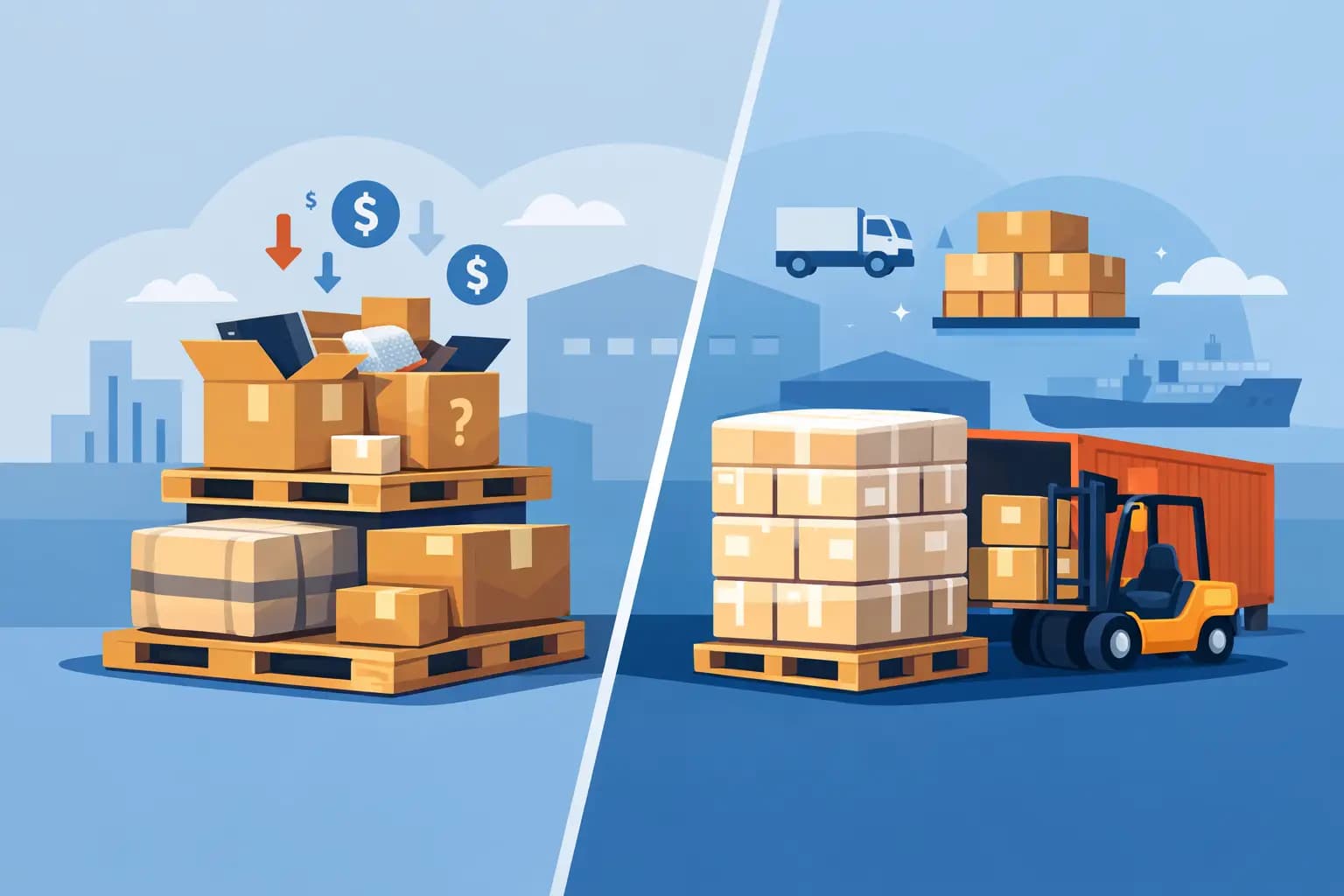
A truckload price can look excellent until the first shipment reveals mixed returns, incomplete sets, or a product mix your customers will not buy. That is why the choice between liquidation pallets vs wholesale lots matters well before you negotiate price. Both can create strong resale margins, but they solve different sourcing problems and carry different levels of risk.
For importers, discount retailers, e-commerce sellers, and regional distributors, the right buying format depends on how much certainty you need around condition, assortment, documentation, and replenishment. A low unit cost is only valuable when the stock can move through your sales channels at speed.
What Is a Liquidation Pallet?
A liquidation pallet is bulk inventory sold after it has left the normal retail supply chain. It may include customer returns, shelf pulls, surplus goods, discontinued lines, damaged-box inventory, or merchandise recovered from store closures and warehouse clear-outs. Pallets are commonly sold by category, retailer source, condition grade, or estimated retail value.
The appeal is obvious: liquidation pallets can offer aggressive discounts and a broad product mix in one purchase. A buyer may acquire branded apparel, toys, small appliances, tools, housewares, or consumer electronics at a fraction of conventional wholesale pricing.
The trade-off is consistency. One pallet may contain high-demand, ready-to-sell products, while another may have missing components, opened packaging, untested items, or goods that require sorting and repacking. Even when a manifest is available, it should be treated as a working reference rather than an absolute guarantee unless the supplier has verified every unit.
Liquidation is often a strong fit for buyers with operational capacity. If you can inspect, test, grade, bundle, photograph, and remarket inventory, you can convert uncertainty into margin. If your business needs identical, shelf-ready products every week, a mixed liquidation pallet may create more work than value.
What Is a Wholesale Lot?
A wholesale lot is a defined quantity of goods offered as a commercial batch, usually with clearer product information and more predictable condition. It may consist of one SKU, several related SKUs, a seasonal collection, an overstock program, or a complete retail assortment. The goods are often new, unused, and supplied with known unit counts, model numbers, sizes, colors, or packaging details.
Wholesale lots can include closeouts and surplus stock, so they are not always priced at standard distributor rates. However, they generally provide more visibility than liquidation pallets. A lot of 5,000 branded footwear pairs, 1,200 cookware sets, or 800 power tools can be evaluated against your customer demand with greater confidence because the quantity and assortment are defined in advance.
That predictability usually comes at a higher purchase price per unit. It can also mean less opportunity to find an exceptional hidden-value deal. But for chain stores, importers, and distributors supplying repeat customers, the cleaner inventory profile can justify the premium.
Liquidation Pallets vs Wholesale Lots: The Real Differences
The main difference is not simply whether inventory is cheap. It is how much information, control, and post-purchase work comes with the deal.
Liquidation pallets are usually more varied. They may contain mixed brands, categories, sizes, conditions, and packaging states. Wholesale lots are generally more structured, with specified quantities and clearer product groupings. If you need to build a broad bargain assortment for a discount store, the variety in liquidation can be useful. If you need to fulfill an order for a buyer who expects matching products, a wholesale lot is the safer format.
Condition is another major dividing line. Liquidation stock can be new, like-new, returned, salvage, or untested. The label matters, but the supplier’s definition matters more. “Customer returns” can range from unopened items to merchandise with visible wear. Wholesale lots are more likely to be new goods, excess inventory, or discontinued products in original packaging, though buyers should still verify this in writing.
Pricing follows the risk. Liquidation pallets may offer the lowest entry cost, especially when the buyer accepts mixed or untested merchandise. Wholesale lots typically require more capital upfront because the seller has already organized and described the inventory. Yet the wholesale lot may deliver a better net result if it reduces labor, disposal, claims, and slow-moving stock.
Calculate Margin After Handling Costs
Do not compare offers using purchase price alone. A pallet priced at $1,500 can become expensive if 20 percent of the units are unsellable, another 30 percent need testing, and freight adds a significant amount per item. A wholesale lot at a higher price may be more profitable if nearly every unit can go directly to retail shelves, online listings, or distribution customers.
Build your buying calculation around landed cost and recovery rate. Landed cost includes the goods, loading, freight, insurance where applicable, customs costs, duties, local delivery, and warehouse handling. Recovery rate is the percentage of inventory you expect to sell at a realistic market price after returns, defects, markdowns, and unsellable units.
For liquidation, add labor for inspection, sorting, cleaning, testing, repacking, and listing. For wholesale lots, consider the cost of holding inventory if the assortment is seasonal or if your sales channel cannot absorb the full volume quickly. A cheap deal that ties up warehouse space for six months is not always a winning deal.
Ask for the Information That Changes the Deal
Experienced buyers do not ask only, “What is your best price?” They ask for information that determines resale value. Before confirming either format, establish the source market, product origin, unit count, pallet count, condition grade, assortment details, packaging status, and available documentation.
For liquidation pallets, request photos of actual stock whenever possible, not only catalog images. Ask whether the goods are manifested, whether electronics are tested, whether apparel includes labels, and whether the load has been picked over. Confirm whether the stated quantity is exact or estimated. If branded goods are involved, clarify the available proof of supply and any channel restrictions before you advertise them to customers.
For wholesale lots, verify SKU lists, size runs, colors, model numbers, expiration dates where relevant, and the percentage of goods in original packaging. A lot can be new and still be difficult to sell if it is heavily weighted toward unpopular sizes, outdated models, or market-specific labeling.
The same rule applies to both: get the commercial terms clear before money moves. Confirm Incoterms, payment schedule, lead time, loading responsibility, export paperwork, and the procedure for material discrepancies. Cross-border buying is profitable when execution is controlled, not assumed.
Choose Based on Your Sales Model
Liquidation pallets work best when your business can handle variation. Outlet stores, flea market sellers, live sellers, online resellers, and discount retailers often benefit from mixed inventory because customers expect changing assortments and value pricing. These buyers can move one-off items quickly and use bundles or clearance offers to recover value from lower-grade goods.
Wholesale lots suit buyers that need repeatable stock. Retail chains, distributors, importers, and marketplace sellers with established listings often need a known quantity of a known product. They benefit from more accurate forecasting, easier pricing, and simpler warehouse operations. A defined lot also makes it easier to offer stock to downstream customers before it arrives.
There is no fixed rule that one format is better. Many successful buyers use both. They purchase wholesale lots for core inventory and add liquidation pallets to create promotional displays, bargain sections, or opportunistic online offers. The key is keeping the two buying strategies separate in your margin planning.
Match the Deal to Your Logistics Capacity
A pallet is not automatically easier to manage than a wholesale lot. A small pallet of mixed consumer returns can demand more warehouse time than several pallets of sealed, identical units. Conversely, a large wholesale lot may require container planning, customs coordination, and storage capacity that a smaller reseller does not have.
Buy at the volume your operation can receive, inspect, store, and sell. That means checking pallet dimensions, gross weight, loading method, pickup location, and whether freight is quoted to your warehouse or only to a port. For international sourcing, paperwork and timing can affect margin as much as the invoice price.
GLOBAL STOCKS supports buyers who need fresh international stock offers alongside practical help with cross-border shipment planning and unusual sourcing requirements. The objective is not simply to secure inventory. It is to secure inventory that can be executed properly from origin to resale market.
The strongest bulk purchase is the one you can explain in numbers: what it costs landed, how fast it will sell, what percentage needs work, and where every unit will go. Start there, then let the deal format follow your business model.