


How to Buy Branded Apparel Pallets for Resale
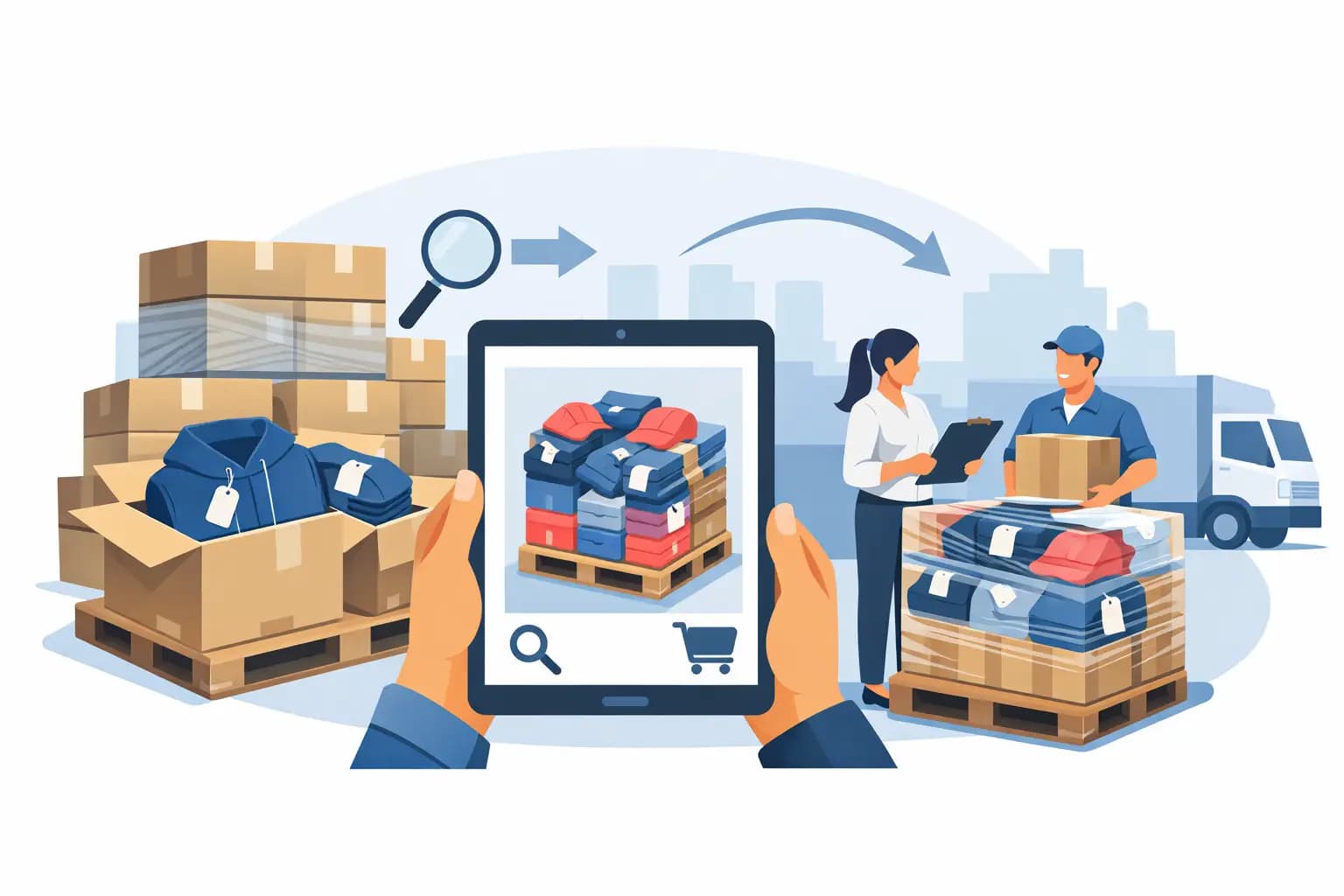
A pallet that looks cheap can still be expensive inventory. The difference is usually hidden in the details: seasonality, size runs, condition, brand mix, packing method, freight cost, and how quickly your market can absorb the goods. When you buy branded apparel pallets, the objective is not simply to secure recognizable labels. It is to purchase a lot with enough resale velocity and margin to justify the capital, handling, and selling effort.
For discount retailers, online sellers, outlet operators, and distributors, branded clothing can move faster than unbranded stock when the assortment is credible and the offer is priced correctly. But liquidation apparel is not a one-size-fits-all purchase. Strong buyers evaluate the stock before they evaluate the discount.
What to Check Before You Buy Branded Apparel Pallets
Start with the commercial facts of the lot. Ask for the total unit count, number of pallets, brands represented, product categories, origin market, condition, available sizes, and packing list where available. A price per pallet is useful for a quick conversation, but a price per unit is what lets you compare opportunities across jeans, shirts, jackets, activewear, children’s clothing, and mixed seasonal inventory.
Brand recognition matters, but it should not be the only buying criterion. A pallet with fewer premium labels may produce better turnover than a mixed lot with famous names and difficult categories. For example, basic tees, hoodies, denim, athletic apparel, and practical outerwear often have wider resale potential than highly specific fashion pieces. Your customer base decides which mix is stronger.
Condition needs equally direct attention. New goods with tags, shelf pulls, customer returns, overstock, and mixed-condition stock should never be valued the same way. New branded apparel with original tags can support clearer merchandising and higher price points. Shelf pulls may be excellent value but can include missing tags, light handling marks, or repackaging. Returns can work for experienced processors, but they require labor, grading standards, and a sales channel built for variation.
Do not assume a large discount automatically creates a large margin. The real question is what percentage of the lot you can sell at each price level. If 70 percent of the goods can sell quickly through your usual channel, the remaining 30 percent still affects your profit. Slow sizes, unpopular colors, damaged pieces, and out-of-season items need a realistic recovery value, not an optimistic one.
Check the size curve and season
Apparel buyers lose money when they buy labels without checking size distribution. A lot heavily weighted toward extra-small, extra-large, or uncommon sizes may be harder to sell, even if the brand is strong. Balanced adult size runs generally create more flexibility for physical retail and online resale. Children’s apparel has its own logic, where age ranges and seasonal demand are often more important than a broad brand assortment.
Seasonality can change a deal quickly. Winter coats bought in spring may be a smart investment for a buyer with storage capacity and a planned fall launch. They can also tie up cash for months if you need immediate turnover. The same applies to swimwear, holiday apparel, and school-season basics. Buy ahead only when your working capital and warehouse space can carry the inventory.
Know whether the lot is assortable
Some pallets are ideal for immediate resale as mixed lots to smaller retailers. Others are better for sorting into categories, brands, sizes, or price tiers. This choice affects labor cost. If your operation has staff, shelving, and an established process for photographing and listing individual pieces, a mixed apparel pallet can create more upside. If you need fast movement with minimal handling, cleaner category-specific lots may be worth paying more for.
Ask how the goods are packed. Carton counts, units per carton, pallets per truckload, and whether cartons are labeled all influence unloading and inventory control. A well-documented lot reduces surprises at receiving and makes it easier to allocate stock across stores, marketplaces, or wholesale customers.
Build a Margin Before You Commit
A professional purchase decision starts with a landed-cost calculation. Take the invoice price and add freight, insurance if required, import duties, customs fees, unloading, warehouse labor, sorting, repacking, marketplace fees, and expected returns. Then divide that total by the realistic sellable unit count, not simply the total number of pieces in the manifest.
For example, a 2,000-piece pallet may look attractive at $4 per unit. After transport, handling, and other costs, the landed cost may become $5.25. If you estimate that 5 percent of the lot is unsellable and another 15 percent must be cleared at a low price, your average realized selling price must still cover the full investment and leave room for profit. This is why experienced liquidation buyers work backward from their expected channel price.
Your sales channel should determine your target margin. A neighborhood discount store may accept lower unit margins because inventory turns fast and selling costs are controlled. An online seller may target higher gross margin because every item needs photography, listings, storage, packing, customer service, and return management. A regional distributor needs enough room for its own customers to make money after resale.
Avoid building a model around the highest possible retail price. Department-store MSRP is a reference point, not a guarantee. Use prices your buyers actually pay for comparable goods in your market. If the brand is not widely recognized in your territory, focus more on garment quality, category demand, and your clearance price than on the original ticket price.
Select the Right Pallet Type for Your Sales Model
There is no universally best branded apparel pallet. The right lot depends on what you sell and how you sell it.
A discount retailer may prefer broad mixed assortments that keep racks full and give shoppers a treasure-hunt experience. An e-commerce reseller may do better with narrower brand or category lots, where product descriptions and pricing can be standardized. A wholesaler supplying independent stores may prioritize cartons with predictable counts and commercial basics that can be resold without extensive processing.
Large buyers should also consider volume continuity. One attractive pallet is useful, but a repeatable source is more valuable when you are filling multiple locations or serving established customers. Ask whether similar stock may become available again, whether the supplier can source comparable categories, and whether future offers can be matched to your preferred brands, sizes, or price range.
GLOBAL STOCKS works with international offers across branded apparel and other high-volume categories, which matters when domestic supply alone cannot support the quantity or assortment you need. Global sourcing expands opportunity, but it also makes documentation and shipping coordination central to the purchase.
Control Risk in International Apparel Buying
Cross-border apparel transactions require clear paperwork and a realistic delivery plan. Confirm the country of origin, shipping point, Incoterms, lead time, pallet dimensions, gross weight, and any export or import requirements before payment. Your customs broker or freight partner should be able to review the product description and tariff treatment early, especially for large-volume imports.
For branded goods, ask for confirmation that the inventory is legitimate surplus, overstock, liquidation, or otherwise authorized stock. You need confidence in the supply chain, accurate brand representation, and documentation consistent with the offer. If brand lists are partial or illustrative, do not value the lot as though every unit belongs to the best-known label shown.
Inspection is another practical safeguard. For a large purchase, request detailed photos, sample manifests, carton labels, or an independent inspection where commercially justified. An inspection does not remove every risk, but it can verify that product categories, condition, and packing broadly match the agreed description. The larger the order, the more valuable that verification becomes.
Payment terms should fit the transaction history and order size. New supplier relationships often begin with smaller trial purchases. That is not hesitation - it is disciplined procurement. A trial order lets you test product accuracy, receiving quality, freight execution, and actual sell-through before scaling into truckload or container quantities.
Turn the Arrival Into Fast Cash Flow
The work is not finished when the pallets reach your warehouse. Receive the inventory against the packing information, photograph exceptions, and separate goods by condition immediately. Fast grading prevents better pieces from being buried in mixed cartons and gives your team a usable picture of what can go to retail, online listings, bundle sales, or clearance.
Price the stock in tiers. High-demand branded pieces and clean, tagged goods can carry your best price. Standard items can fill value racks or online bundles. Slow-moving styles should move quickly through promotions rather than consume space and capital for a theoretical future price. The faster you learn what your market buys, the stronger your next pallet decision becomes.
The best apparel liquidation deals are not the ones with the biggest advertised percentage off. They are the lots you can verify, receive without disruption, and sell with a clear plan. Buy with the numbers in front of you, keep your logistics tight, and let proven sell-through guide the next order.